Early in my career, I boasted to other educators that I’d never taught the same course twice, that I constantly tinker—sometimes even while a course is running. I was always on a mission to find the right combination of elements for each batch of students I am fortunate to teach.
I still tinker. I am a tinkerer.
I tinker because I am legitimately energized by the prospect of the new, of finding and developing new ways of teaching. I also tinker out of fear of stagnation. When I started my first full-time teaching position at DCCC in 2003, I vividly remember the retirement of a long-time sociology faculty member—a man who would shuffle to his classes wheeling a banker’s cart with stacks of photocopies of the same tests he’d been using for thirty plus years. He was a good man, even a good teacher, but the thought of such repetition, such lack of course revision was deeply antithetical to how I understood the workspace of the classroom.
Labor-based contract grading
It was a natural evolution. The more I taught (specifically writing), the more I became frustrated with grading. It wasn’t that I hated giving students feedback on their writing; it was that I became increasingly ill at ease with assigning their work “grades.” In the early 2000s, I began incorporating more and more student self-reflection in my teaching.
By the 2010s, I was regularly using eportfolios and “Exit Letters” to provide students with opportunities to grade themselves (through directed self-assessment). In 2022, I dispensed with traditional grading all together and moved to a labor-based grading model. Click to see an example of the Labor Contract I developed.
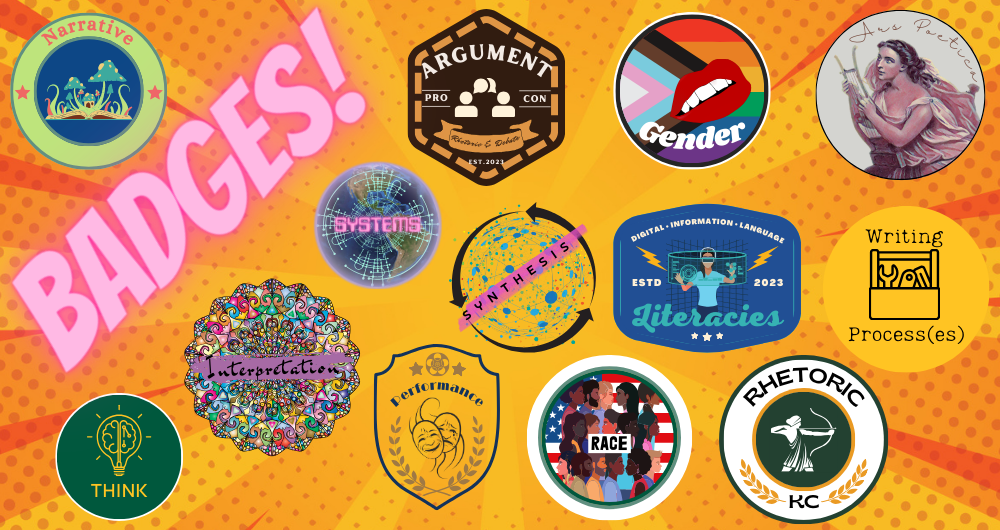
Badges
One of the things I’ve been working on the past couple of years is using the Moodle lesson function to design and deliver interactive, self-directed, asynchronous online content—either to drive my online classes, or to supplement (hybridize) my on-site classes. I call them “Badges”—as in Boy Scouts Merit Badges.
This strategy has been extremely helpful as a means by which to create more intentional course design (modules anchored by badges) and de-emphasize on-site-only access to vital course content.
Click Badge #3: Ars Poetica to read more and see an example!


The Way
I first developed this interactive syllabus “lesson” for my fully online ENG 118 course (in 2020), and it has since evolved and expanded, and I now use a version of it in every course I design.
The Way serves a number of purposes: it introduces students to me, my teaching philosophy, and provides an overview of the course; it also introduces them to Moodle, interactive lessons, and my computing expectations. Students read, watch videos, and answer some basic questions. The current version also asks them to create and share a Google Drive folder specifically for my course. When they successfully navigate The Way, they are rewarded with a link to the course syllabus!
 stevenkapica.com